
+91 90324 21995 [email protected] Tirupati, Andhra Pradesh
+91 90324 21995

Robotics Course

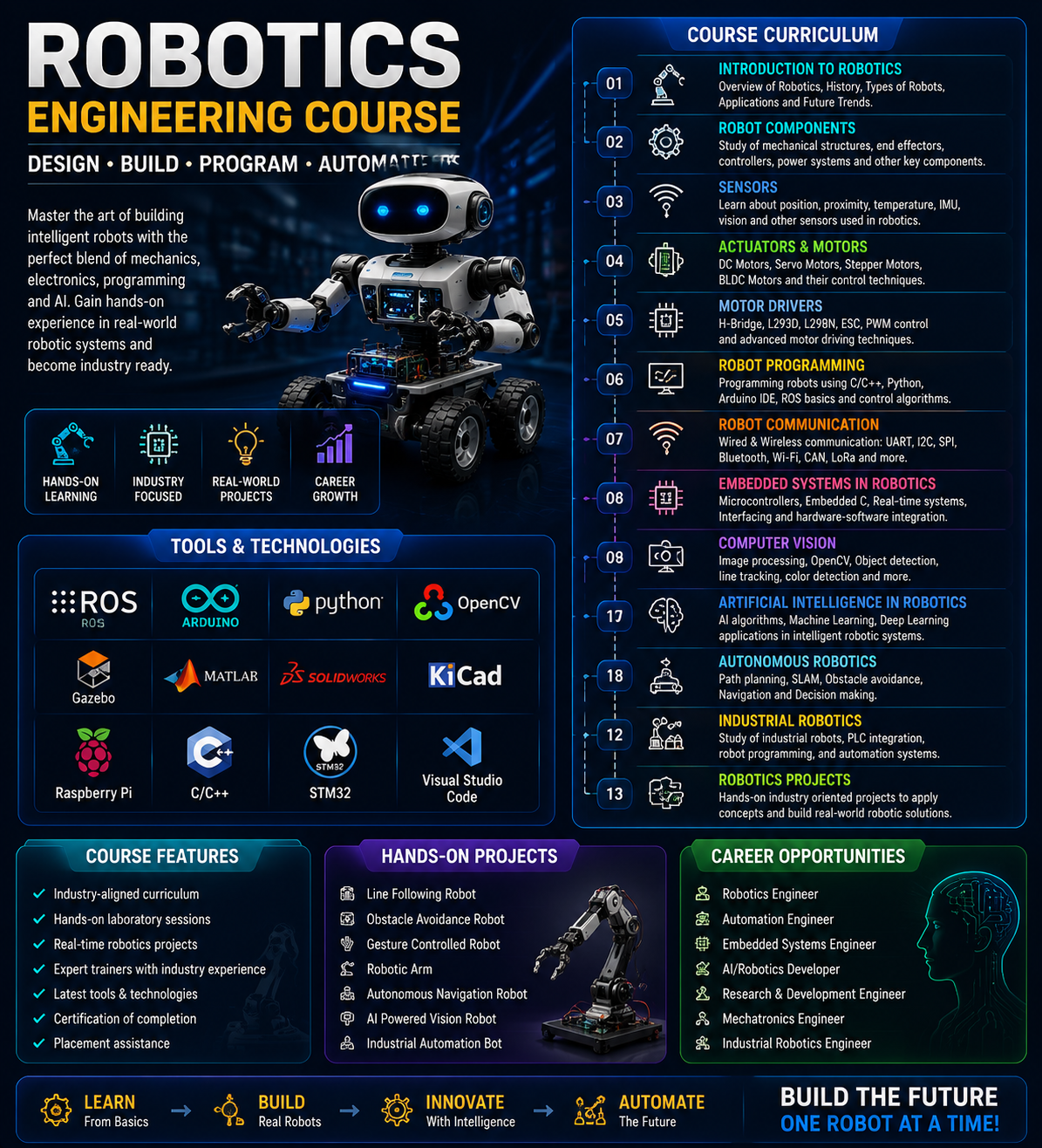
Learn Robotics Fundamentals using Arduino, Raspberry Pi, ESP32, STM32, and Embedded C Programming. Design, build, and program intelligent robotic systems, understand robot kinematics, interface sensors and actuators, develop autonomous navigation algorithms, implement computer vision and AI-based ro
4.8/5 Student Rating
5,000+ Students Trained
200+ Hiring Partners
Weekly Batches Available

Robotics

Duration: 6 Months
Mode: Online / Offline
Language: English, Telugu, Tamil, Hindi
Industry-Recognized Certification from Takeoff Training Institute
Python for Data Science
Machine Learning
Deep Learning
Data Visualization
AI & Neural Networks
Model Deployment
Real Industry Projects
Placement Support
Pandas & NumPy
Statistics & Probability
Python for Data Science
Machine Learning
Deep Learning
Data Visualization
AI & Neural Networks
Model Deployment
Real Industry Projects
Placement Support
Pandas & NumPy
Statistics & Probability
Course Curriculum

Comprehensive Robotics Curriculum

The Robotics Engineering program is designed to build a strong foundation in robotics, embedded systems, automation, and intelligent robotic technologies. The curriculum covers Robot Fundamentals, Robot Components, Sensors, Actuators & Motors, Motor Drivers, Embedded Systems, Embedded C Programming, Robot Communication Protocols, Computer Vision, Artificial Intelligence, Autonomous Navigation, Industrial Robotics, and Human-Robot Interaction. Students gain practical experience through robot design, sensor interfacing, motor control, embedded programming, AI integration, laboratory experiments, and real-time robotics projects. By the end of the program, learners will be proficient in robot design and development, microcontroller programming, sensor and actuator interfacing, robotic control systems, computer vision, AI-based robotics, autonomous navigation, ROS (Robot Operating System), and industry-standard robotics development tools, preparing them for careers as Robotics Engineers, Automation Engineers, Embedded Systems Engineers, Robotics Software Developers, Mechatronics Engineers, Industrial Automation Engineers, and AI Robotics Engineers.

Detailed Syllabus

Introduction to Robotics

Introduction to Robotics
History and Evolution of Robotics
Types of Robots
Robot Classification
Applications of Robotics
Future Trends in Robotics
Safety Standards in Robotics

Robot Components

Robot Mechanical Structure
End Effectors
Robot Manipulators
Chassis and Mobile Platforms
Power Supply Systems
Embedded Controllers
Robot Assembly Fundamentals

Sensors & Actuators

Introduction to Sensors
Proximity Sensors
Ultrasonic Sensors
IR Sensors
IMU (Accelerometer & Gyroscope)
Temperature & Environmental Sensors
Servo Motors
DC Motors
Stepper Motors
BLDC Motors

Motor Drivers & Robot Programming

Introduction to Motor Drivers
Motor Driver
L293D Driver Modules
PWM Motor Speed Control
ESC for BLDC Motors
Embedded C Programming
Python for Robotics
Arduino Programming
Raspberry Pi Programming
Robot Control Algorithms

Robot Communication & Embedded Systems

UART Communication
SPI Communication
I2C Communication
Bluetooth Communication
Wi-Fi Communication
ZigBee & LoRa
ESP32 Communication
Embedded Systems in Robotics
Hardware-Software Integration
Real-Time Embedded Systems

Computer Vision & Artificial Intelligence

Introduction to Computer Vision
Image Processing Fundamentals
OpenCV Basics
Object Detection
Face Detection & Recognition
Color Detection
Line Following Algorithms
Artificial Intelligence in Robotics
Machine Learning Basics
Deep Learning for Robotics
AI-Based Decision Making

Autonomous & Industrial Robotics

Autonomous Robot Architecture
Robot Navigation
Path Planning Algorithms
Obstacle Avoidance
Localization & Mapping
Industrial Robot Fundamentals
Robotic Arms
Industrial Automation

Robotics Practice & Industry Projects

Line Following Robot
Obstacle Avoidance Robot
Bluetooth Controlled Robot
Wi-Fi Controlled Robot
Gesture Controlled Robot
Voice Controlled Robot
Robotic Arm
Pick and Place Robot
Autonomous Navigation Robot
Computer Vision Robot
AI-Based Surveillance Robot
Final Robotics Capstone Project
Technologies

Key Tools You'll Master

Python IDLE and Arduino IDE technologies are used in robotics engineering for robot programming, embedded system development, microcontroller interfacing, automation control, AI-based applications, and intelligent robotic system development.
Arduino IDE
Python IDLE

Course Schedule

India Standard Time (IST)

Duration
6 Months
Total Hours
150+ Hours
Weekly Hours
12h per week
Classes per Week
6 Sessions
Course Features

What's Included

Everything you need to succeed - from day one to your first job offer.

Industry-Oriented Robotics Curriculum

Learn a comprehensive robotics curriculum designed to meet current industry requirements, covering robot design, automation, AI, and intelligent systems.

Hands-on Robot Design & Development

Gain practical experience in designing, assembling, programming, and developing robotic systems for real-world applications.

Sensor & Actuator Interfacing

Understand the integration of sensors and actuators to enable robots to perceive, interact, and respond to their environment.

Motor Driver & Motion Control

Learn motor control techniques, drive systems, and motion planning methods used in robotic platforms.

Robot Communication Protocols

Explore communication technologies and protocols that enable efficient data exchange between robotic components and systems.

Computer Vision Applications

Develop knowledge of image processing and computer vision techniques for robotic perception and automation tasks.

Artificial Intelligence in Robotics

Learn how AI and machine learning technologies enhance robot decision-making, navigation, and intelligent operations.

Assignments & Practical Exercises

Strengthen your technical skills through industry-focused assignments and hands-on robotics exercises.

Mini Projects

Apply robotics concepts by building practical mini projects that improve problem-solving and implementation skills.

Capstone Robotics Project

Complete an advanced robotics project that showcases your ability to design, develop, and implement intelligent robotic solutions.

Interview Preparation

Get expert guidance on technical interviews, robotics industry expectations, resume preparation, and career opportunities.

Certification

Course Completion Certificate

Earn an industry-recognized certificate upon successfully completing the program.
Course Completion Certificate
Recognized Professional Certificate
Start Your Career

Ready to Launch Your Career?

Talk to our training advisors and get a personalized learning roadmap, course fee details, batch schedule, and career guidance - all for free.

Free 1-on-1 Career Consultation
Personalized Learning Roadmap
Course Fee & EMI Details
Upcoming Batch Schedule
Free Demo Class Booking

Talk to a Career Expert

Fill in your details - our advisor will contact you within 24 hours.