
Learn Mechatronics Engineering Fundamentals through practical training in Mechanical Systems, Electronics, Embedded Systems, Microcontrollers, Sensors, Actuators, Robotics, IoT, and Artificial Intelligence. Develop the skills required to design, control, and optimize intelligent electromechanical sy
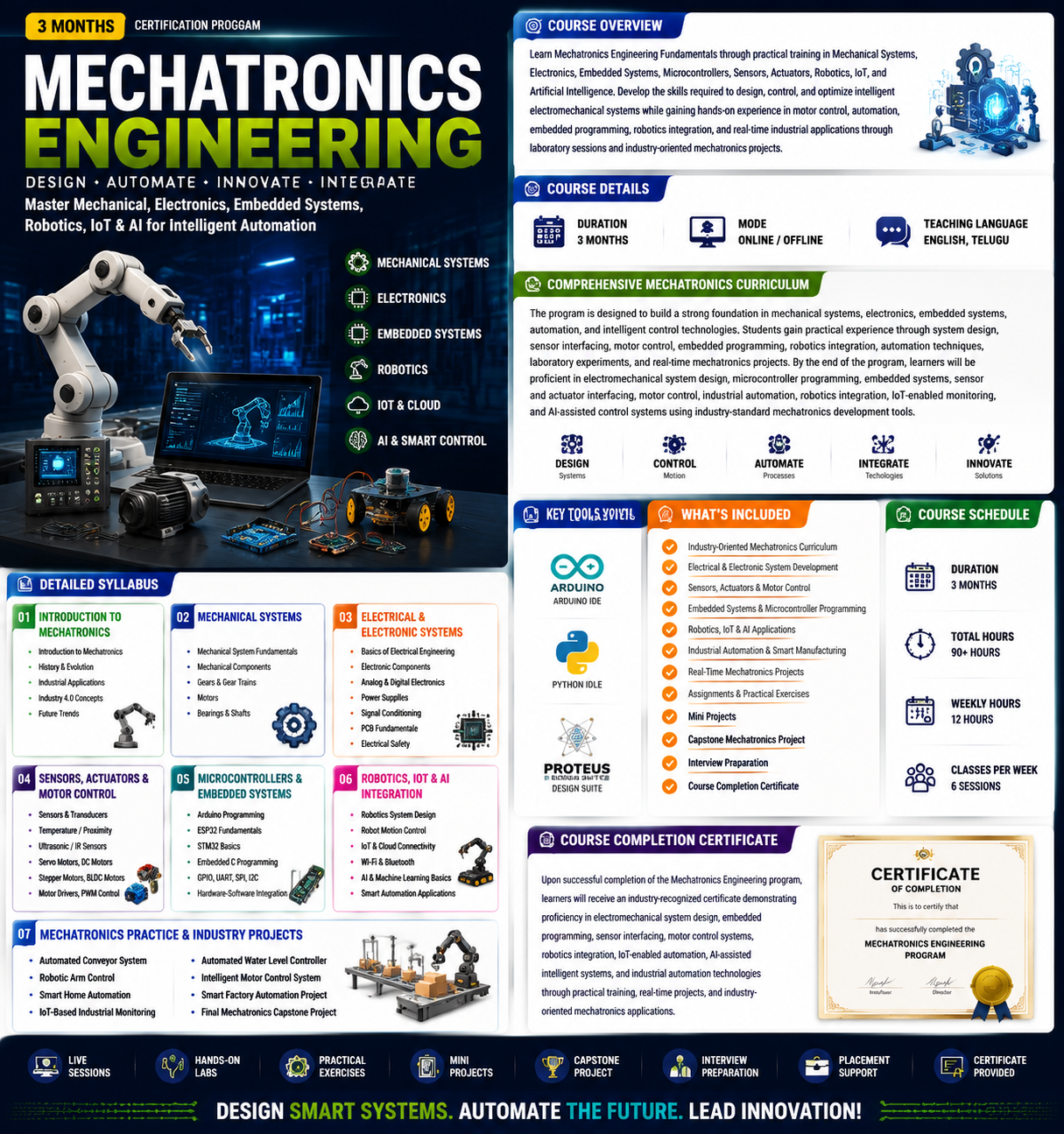
The Mechatronics Engineering program is designed to build a strong foundation in mechanical systems, electronics, embedded systems, automation, and intelligent control technologies. The curriculum covers Mechatronics Fundamentals, Mechanical Systems, Electrical & Electronic Systems, Sensors & Transducers, Actuators, Microcontrollers, Embedded Systems, Motor Control Systems, Robotics, IoT, Artificial Intelligence, and Industrial Automation. Students gain practical experience through system design, sensor interfacing, motor control, embedded programming, robotics integration, automation techniques, laboratory experiments, and real-time mechatronics projects. By the end of the program, learners will be proficient in electromechanical system design, microcontroller programming, embedded systems, sensor and actuator interfacing, motor control, industrial automation, robotics integration, IoT-enabled monitoring, and AI-assisted control systems using industry-standard mechatronics development tools, preparing them for careers as Mechatronics Engineers, Automation Engineers, Embedded Systems Engineers, Robotics Engineers, Control Systems Engineers, Industrial Automation Engineers, and IoT Engineers.
Proteus, Python IDLE, and Arduino IDE technologies are used in mechatronics engineering for circuit simulation, embedded programming, microcontroller development, automation control, and designing intelligent electromechanical systems.


India Standard Time (IST)
Everything you need to succeed - from day one to your first job offer.
Learn a comprehensive curriculum aligned with modern industrial requirements, combining mechanical, electrical, electronics, and automation technologies.
Gain practical knowledge in designing, developing, and troubleshooting electrical and electronic systems used in industrial applications.
Understand sensor technologies, actuator systems, motor control techniques, and their applications in automated systems.
Develop skills in microcontroller programming, embedded system design, and hardware-software integration for intelligent machines.
Explore robotics technologies, IoT solutions, and AI-based applications for next-generation smart systems.
Learn automation concepts, PLC-based systems, smart manufacturing practices, and Industry 4.0 technologies.
Work on practical projects that combine mechanical, electronic, and software concepts to solve real-world engineering challenges.
Enhance your technical understanding through structured assignments and hands-on exercises based on industry scenarios.
Build practical mini projects to apply concepts and develop confidence in mechatronics system design and implementation.
Complete an industry-focused final project demonstrating your ability to design and develop integrated mechatronics solutions.
Receive career guidance, technical interview training, and preparation support to confidently approach industry opportunities.
Earn a certificate upon successful completion of the training program, validating your skills and practical expertise in mechatronics.
Earn an industry-recognized certificate upon successfully completing the program.

Talk to our training advisors and get a personalized learning roadmap, course fee details, batch schedule, and career guidance - all for free.